
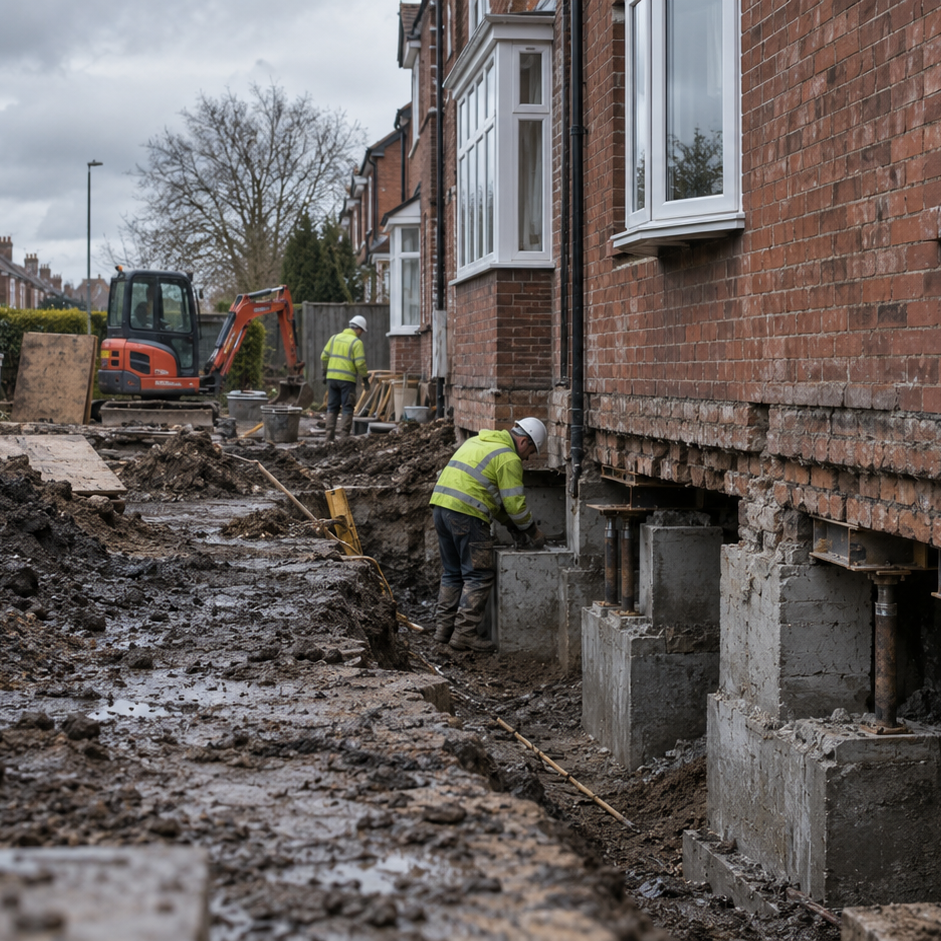
FOUNDATION STRENGTHENING SPECIALISTS
Strengthening and Supporting Existing Foundations
Underpinning is used to strengthen, stabilise or extend the foundations of an existing structure. It may be required where foundations have moved, the supporting ground has changed or alterations to a building place additional loads on the existing structure.
UK Underpinning & Piling provides specialist underpinning solutions for properties throughout the UK. Our team works on residential, commercial and construction projects, taking into account the existing structure, ground conditions, site access and engineering requirements before deciding on the most appropriate method.
With decades of practical experience, we can undertake everything from traditional mass concrete underpinning through to more specialist beam, piled and restricted-access solutions.
When Might a Property Need Underpinning?
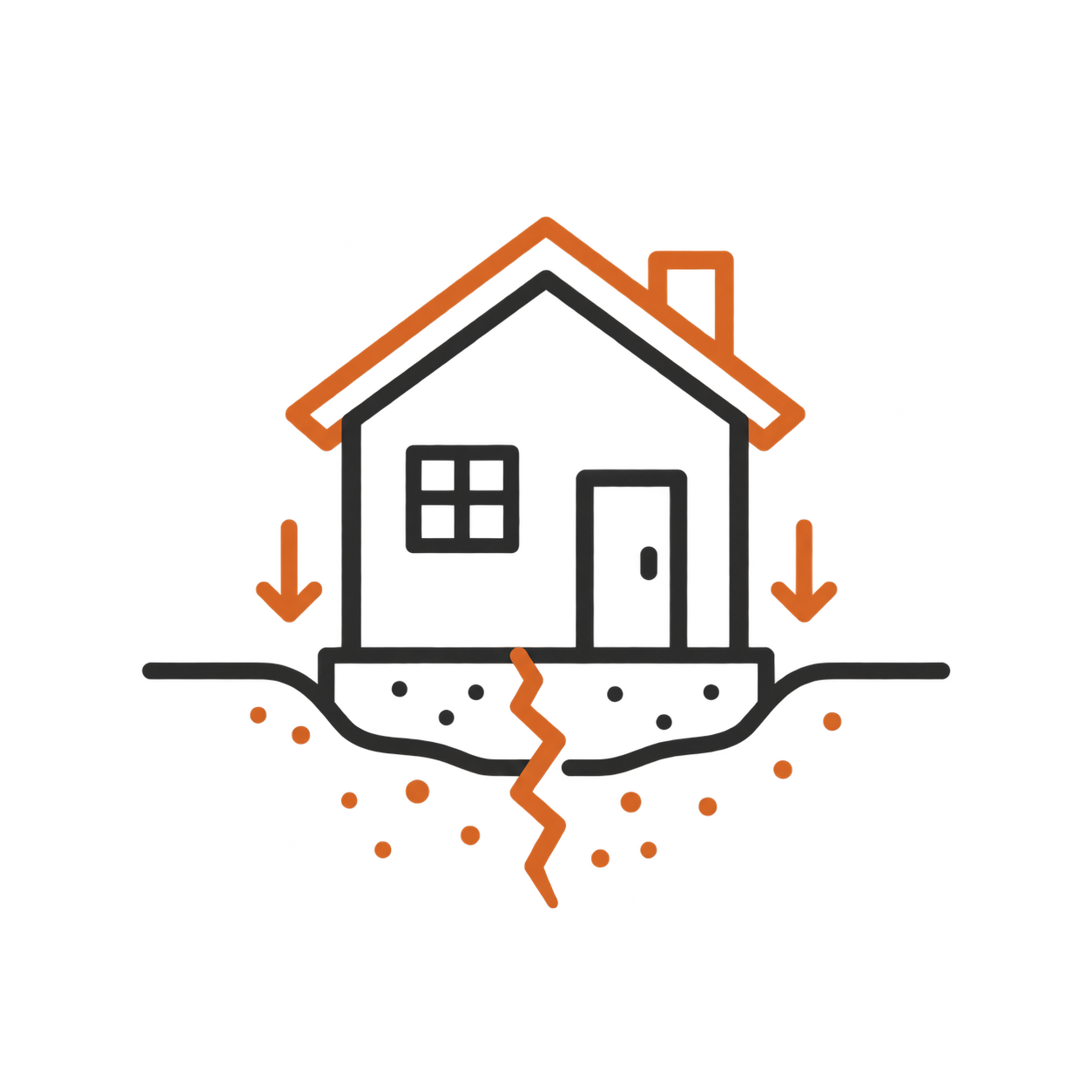
Subsidence & Movement
Changes in the ground beneath a property can cause foundations to move or settle, potentially affecting the structure above.

Existing Foundation Failure
Older or inadequate foundations may no longer provide the support required by the building.

Structural Alterations
Extensions, additional storeys and major alterations can increase structural loads and require existing foundations to be strengthened.

Difficult Ground Conditions
Poor soil, changing moisture levels, nearby trees, drainage problems or restricted sites can all influence the type of foundation solution required.
FOUNDATION ASSESSMENT & PLANNING
Choosing the Right Underpinning Method
No two foundation problems are exactly the same. The most suitable underpinning method depends on the existing structure, the condition and depth of the foundations, the ground beneath the property and the loads that need to be supported.
Before work begins, the project needs to be considered as a whole. Access restrictions, nearby buildings, drainage, trees, soil conditions and the extent of any structural movement can all influence the solution that is ultimately required.
UK Underpinning & Piling takes a site-specific approach to every project, working from the requirements of the property and any structural or engineering information available. This allows the underpinning method to be selected around the actual conditions on site rather than relying on a standard solution.
KEY CONSIDERATIONS
Every underpinning project is influenced by a combination of structural, ground and site factors that need to be carefully considered.
Mass Concrete Underpinning
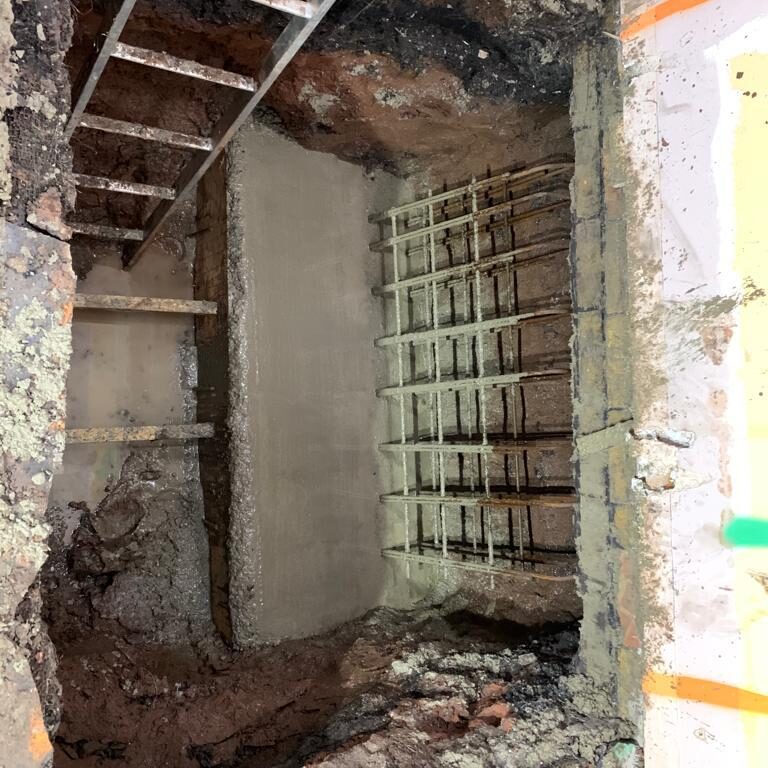
Mass concrete underpinning is one of the most established and widely used methods of strengthening existing foundations. It is often chosen where the existing foundation needs to be deepened or reinforced and where the ground conditions allow traditional excavation methods to be used safely.
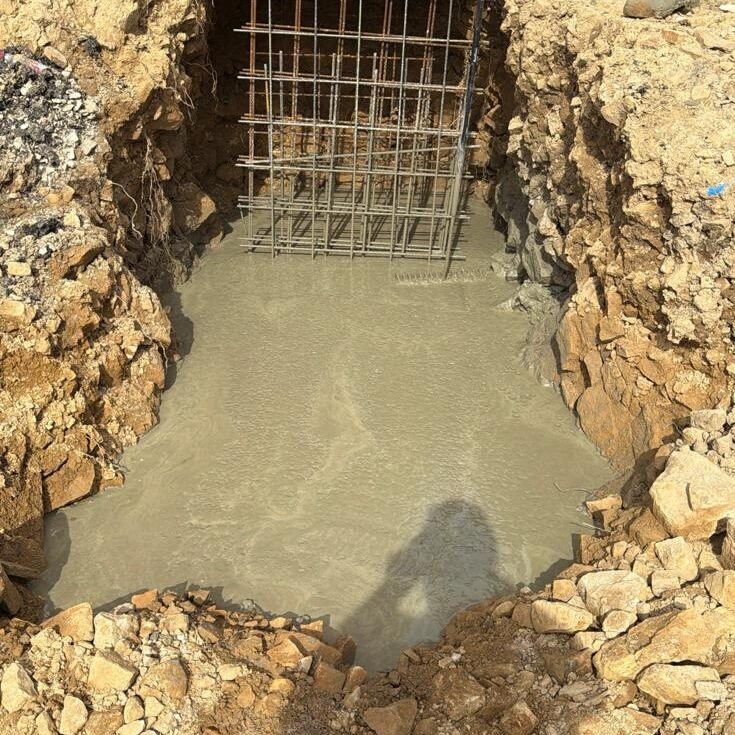
The process normally involves working in a carefully planned sequence beneath the existing structure. Small sections, often referred to as pins, are excavated one at a time so that the building remains supported throughout the works. These excavations are then filled with concrete to create a new, deeper base beneath the original foundation.
By extending the foundation down to more suitable load-bearing ground, mass concrete underpinning can improve the stability of the structure and help reduce further movement. It can be particularly suitable for residential properties, older buildings and situations where the required depth is relatively shallow.
Every project needs to be assessed individually, as the depth of the existing foundations, soil conditions, access and structural requirements will all influence whether mass concrete underpinning is the right solution.
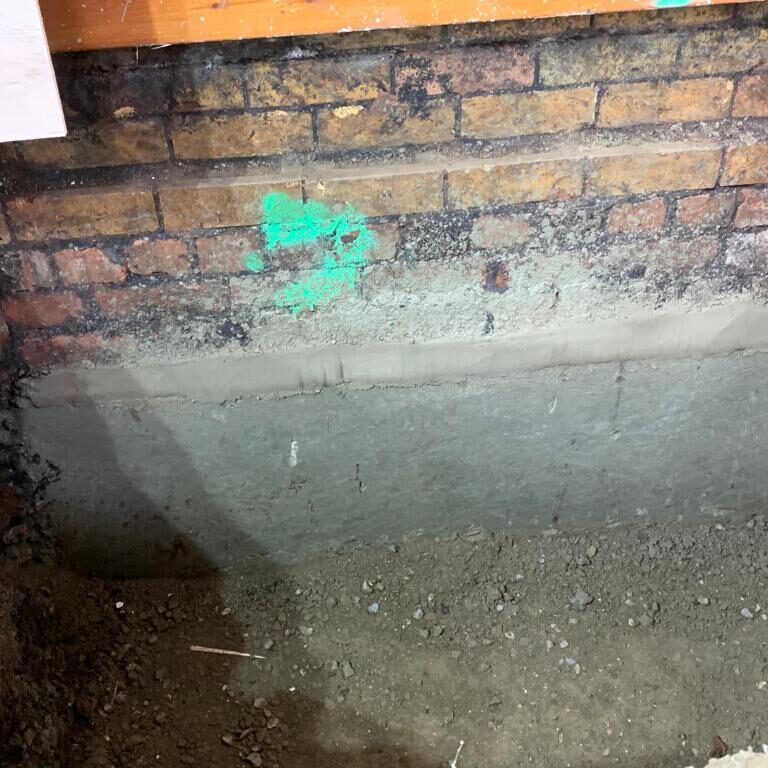
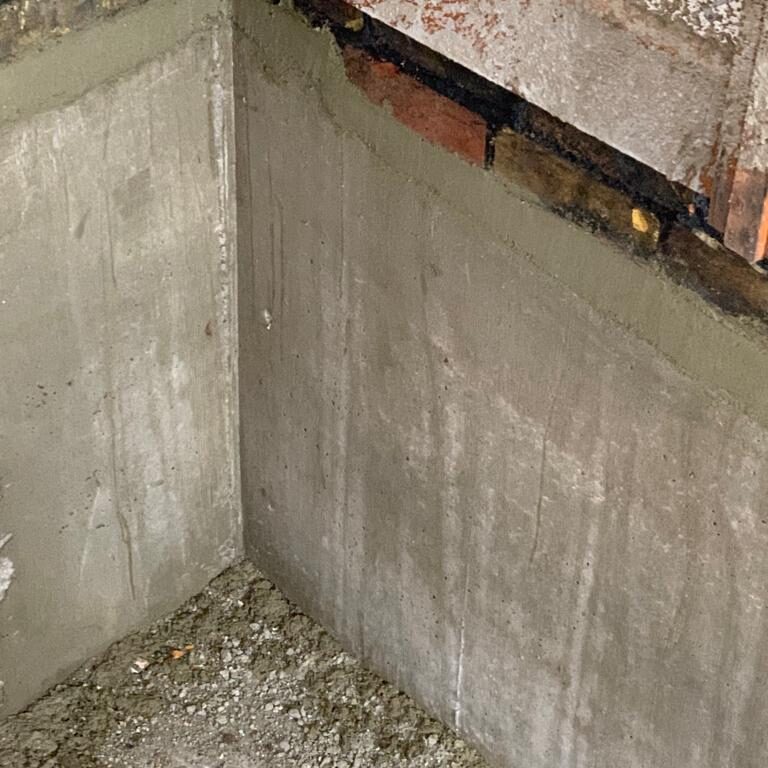
Beam & Base Underpinning
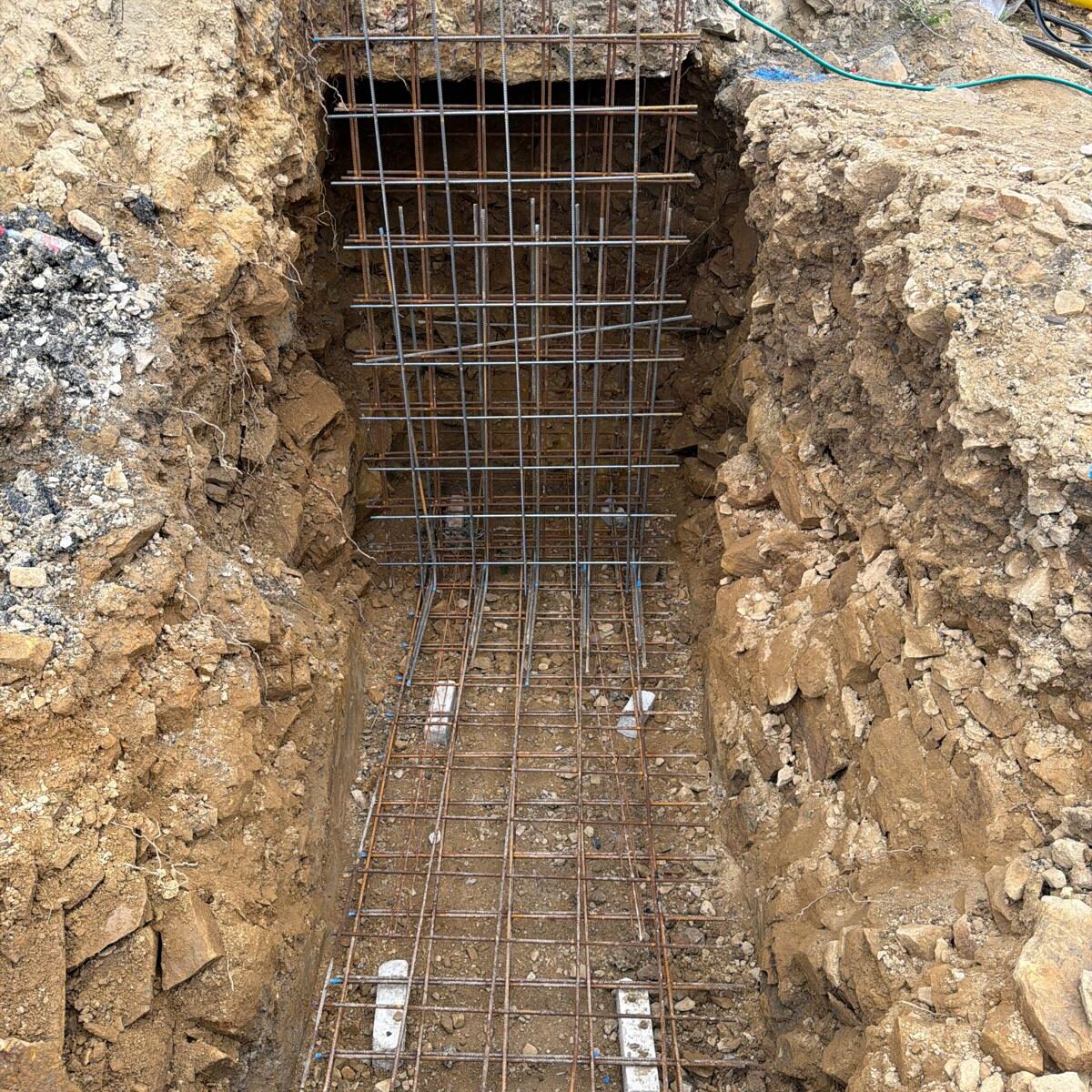
Beam and base underpinning is a reinforced foundation method used where structural loads need to be transferred and distributed onto new concrete bases beneath an existing building.
The system typically uses reinforced concrete beams positioned beneath or alongside the existing foundations. These beams transfer the weight of the structure onto strategically placed concrete bases, helping to spread the load more effectively and provide additional support where the original foundations are no longer adequate.
This method can be particularly useful where a greater depth needs to be reached, where loads are higher or where a more engineered approach is required than traditional mass concrete underpinning can provide. The size, position and reinforcement of the beams and bases will depend on the structure, ground conditions and the loads being supported.
Beam and base underpinning is often used on more complex residential or commercial projects and can be designed around the individual requirements of the building. Careful sequencing and structural planning are important throughout the works to ensure the existing structure remains properly supported.
Mini-Piled Underpinning
Mini-piled underpinning is used to transfer the load of an existing structure down to deeper, more stable ground where conventional shallow underpinning methods may not be suitable.
Small-diameter piles are installed beneath or adjacent to the existing building and are connected to the structure through beams, pile caps or other structural elements. These piles carry the building load past weaker or unstable ground and into stronger load-bearing strata at greater depth.
This approach can be particularly useful where poor ground conditions are present, where deeper support is required or where the existing structure is experiencing significant movement. It can also be a strong option on sites with restricted access, as specialist mini-piling equipment can often operate in areas that larger piling rigs cannot reach.
Mini-piled underpinning can be used on residential, commercial and construction projects and is often suited to properties where traditional excavation would be difficult, impractical or too disruptive. The pile type, depth and layout will depend on the site conditions and structural requirements.
Needle Beam Underpinning
Needle beam underpinning is a specialist method used to support and transfer structural loads while new or strengthened foundations are formed beneath an existing building.
The system uses structural steel or reinforced beams, known as needle beams, which pass through or beneath the structure and are supported at carefully selected points. These beams temporarily or permanently carry the load while work is carried out below, allowing new foundation elements to be constructed without compromising the stability of the building above.
This method is often used where access beneath the structure is limited, where conventional underpinning methods are unsuitable or where loads need to be transferred away from a particular section of the existing foundation. It can also be useful on more complex structural projects where the building needs to remain securely supported throughout the works.
Needle beam underpinning requires careful planning and accurate load assessment, as the position and capacity of the beams must be designed around the structure being supported. It is generally used where a more controlled and engineered underpinning solution is required.
RESIDENTIAL & COMMERCIAL UNDERPINNING
Underpinning for Homes, Businesses & Construction Projects
UK Underpinning & Piling undertakes underpinning work for residential, commercial and construction projects throughout the UK. Our experience covers everything from individual homes affected by foundation movement to larger structural projects requiring carefully planned foundation strengthening.
For residential properties, underpinning may be required to stabilise existing foundations, support an extension or additional storey, strengthen an older structure or address movement caused by changes in the supporting ground. Every property is different, so the solution needs to be based on the actual conditions present rather than the appearance of cracking alone.
We also work with builders, developers, structural engineers and commercial clients where underpinning forms part of a wider construction or redevelopment project. This can include strengthening existing structures before alterations, transferring loads onto new foundations or working within restricted sites where conventional foundation methods are not practical. With decades of practical foundation experience, we can deliver traditional and specialist underpinning methods across a wide range of property types and site conditions.